
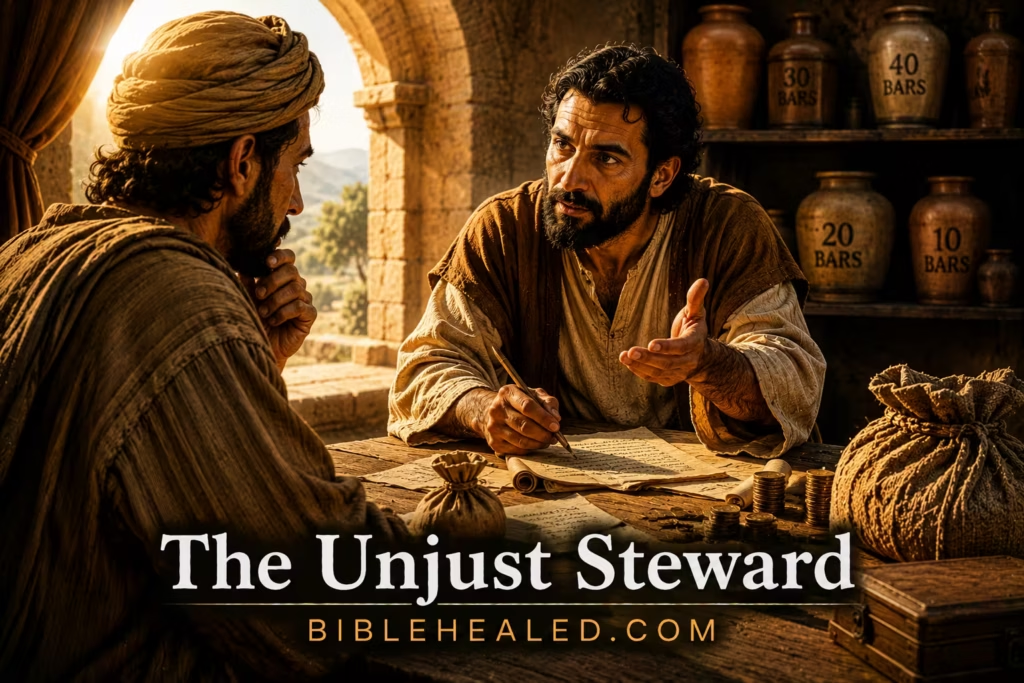
The Parable of the Unjust Steward: Verse, Meaning & Lesson
The Parable of the Unjust Steward is one of Jesus’ most challenging and thought-provoking teachings about stewardship, wisdom, accountability, and eternal priorities. This parable appears in Luke 16:1–13 and focuses on a manager who is accused of wasting his master’s possessions. After learning that he is about to lose his position, the steward acts quickly and strategically to prepare for his future. Jesus uses this surprising story to teach important spiritual truths about money, faithfulness, and the wise use of earthly resources.
In the parable, a rich man discovers that his steward has been mismanaging his goods and demands an account from him. Realizing that he is about to be dismissed, the steward reduces the debts owed by his master’s debtors in order to gain favor with them. Surprisingly, the master commends the steward, not for dishonesty, but for acting shrewdly and wisely in preparing for the future. Jesus then explains that the “children of this world” are often wiser in earthly matters than the “children of light” and teaches His followers to use worldly wealth in ways that have eternal value.
The Parable of the Unjust Steward teaches that believers should live wisely, faithfully, and with eternal perspective. Jesus emphasizes that earthly possessions are temporary and should be used responsibly in ways that honor God and benefit others spiritually. The parable also teaches that faithfulness in small matters reveals a person’s true character and spiritual reliability.
The Parable of the Unjust Steward in Luke 16:1–13
Luke 16:1–13 WEB
“He also said to his disciples, ‘There was a certain rich man who had a manager. An accusation was made to him that this man was wasting his possessions. He called him, and said to him, “What is this that I hear about you? Give an accounting of your management, for you can no longer be manager.”
The manager said within himself, “What will I do, seeing that my lord is taking away the management position from me? I don’t have strength to dig. I am ashamed to beg. I know what I will do, so that when I am removed from management, they may receive me into their houses.” Calling each one of his lord’s debtors to him, he said to the first, “How much do you owe my lord?” He said, “A hundred batos of oil.” He said to him, “Take your bill, and sit down quickly and write fifty.” Then he said to another, “How much do you owe?” He said, “A hundred cors of wheat.” He said to him, “Take your bill, and write eighty.”
His lord commended the dishonest manager because he had done wisely, for the children of this world are, in their own generation, wiser than the children of the light. I tell you, make for yourselves friends by means of unrighteous mammon, so that when it fails, they may receive you into the eternal tents. He who is faithful in a very little is faithful also in much. He who is dishonest in a very little is also dishonest in much. If therefore you have not been faithful in the unrighteous mammon, who will commit to your trust the true riches? If you have not been faithful in that which is another’s, who will give you that which is your own?
No servant can serve two masters, for either he will hate the one and love the other; or else he will hold to one, and despise the other. You aren’t able to serve God and mammon.’”
How Luke 16:1–13 Relates to the Parable of the Unjust Steward
In Luke’s Gospel, Jesus uses the example of a dishonest manager to teach about wisdom and preparation rather than dishonesty itself. The steward realizes that his position is temporary and takes immediate action to prepare for what comes next. Jesus highlights the steward’s urgency, foresight, and strategic thinking. The focus is not on approving dishonesty but on recognizing the importance of wisely preparing for the future.
Luke also emphasizes stewardship and accountability. The steward had been entrusted with his master’s possessions and was required to give an account for how he managed them. Jesus teaches that people are responsible for how they use the resources, opportunities, and blessings entrusted to them by God. Earthly possessions are temporary, but they can be used for eternal purposes.
The passage concludes with a warning about divided loyalty. Jesus explains that no one can serve both God and money. Luke highlights that material wealth can become a spiritual master if it controls a person’s heart and priorities. Believers are called to use wealth wisely while remaining fully devoted to God above all else.
What Is the Meaning of the Parable of the Unjust Steward
The Parable of the Unjust Steward teaches that believers should use earthly resources wisely with eternal priorities in mind. Jesus uses the steward’s urgency and strategic planning to show that people should be equally intentional about spiritual matters and the Kingdom of God. Earthly wealth is temporary, but how it is used has lasting spiritual significance.
This parable also teaches the importance of faithfulness and accountability. God entrusts people with resources, opportunities, and responsibilities, expecting them to manage these things wisely and honestly. Jesus explains that faithfulness in small matters reflects a person’s true character. Those who are trustworthy with little can also be trusted with greater responsibilities.
The Parable of the Unjust Steward further warns against allowing money or possessions to become an idol. Jesus clearly states that no one can serve both God and mammon. Wealth itself is not condemned, but devotion to wealth competes with devotion to God. The parable ultimately teaches wisdom, stewardship, faithfulness, eternal priorities, and wholehearted loyalty to God.
Lessons from the Parable of the Unjust Steward
1. Believers Must Live with Eternal Perspective
The steward acted quickly because he understood his current position was temporary. Jesus teaches that earthly life and possessions are also temporary. Believers should make decisions with eternity in mind rather than focusing only on temporary success. Spiritual priorities should shape daily living. Wisdom considers eternal consequences.
2. Faithfulness in Small Things Matters
Jesus explains that anyone faithful in little will also be faithful in much. Small responsibilities reveal a person’s true character and integrity. God values consistency, honesty, and reliability in everyday life. Spiritual faithfulness begins with ordinary decisions. Small acts of integrity matter greatly before God.
3. Earthly Wealth Should Be Used Wisely
The parable teaches that money and possessions are tools, not ultimate goals. Jesus encourages believers to use resources in ways that honor God and benefit others spiritually. Wealth can be used to support generosity, ministry, compassion, and eternal purposes. Material possessions are temporary. Wise stewardship focuses on lasting spiritual value.
4. Accountability Before God Is Certain
The steward was eventually required to give an account of his management. Jesus teaches that every person will also answer to God for how they used their time, abilities, and resources. Stewardship involves responsibility. Believers are caretakers, not owners, of what God provides. Accountability encourages wise and faithful living.
5. You Cannot Serve God and Money
Jesus concludes the parable with a direct warning about divided loyalty. Money can easily become a controlling influence if it becomes the center of life. Believers must choose whether their trust and devotion belong to God or material wealth. Wealth should serve God’s purposes rather than replace Him. True discipleship requires wholehearted devotion to God.
The Unjust Steward Parable Summary
The Parable of the Unjust Steward teaches about wisdom, stewardship, accountability, and eternal priorities. In Luke 16:1–13, Jesus tells the story of a dishonest manager who acts strategically after learning he will lose his position. Although the steward’s dishonesty is not praised, his urgency and foresight are used to teach spiritual lessons about preparation and wise stewardship.
Luke emphasizes that earthly resources are temporary and should be used in ways that honor God and serve eternal purposes. Jesus teaches that faithfulness in small matters reflects true spiritual character and that believers are accountable for how they manage what God entrusts to them.
This parable ultimately warns against serving money instead of God. The Parable of the Unjust Steward teaches believers to live wisely, remain faithful, and use temporary possessions with eternal perspective. Jesus calls His followers to pursue wholehearted devotion to God above worldly wealth and priorities.
Read More Parables In the Bible
The Parable of the Lamp on a Stand is just one of many parables in the Bible. Use the links below to explore more of Jesus’ parables, their meanings, and life lessons.
- All Jesus Parables
- 38 Parables of Jesus (Summarized List)
- Jesus Parables In the Book of Matthew
- Jesus Parables In the Book of Mark
- Jesus Parables In the Book of Luke
- Parables About the Kingdom of God & Heaven
- Parable of the Barren Fig Tree
- Parable of the Divided Kingdom
- Parable of the Faithful Servant
- Parable of the Fig Tree
- Parable of the Friend at Night
- Parable of the Good Samaritan
- Parable of the Great Banquet
- Parable of the Growing Seed
- Parable of the Hidden Treasure
- Parable of the Householder
- Parable of the Lamp on a Lamp Stand
- Parable of the Lost Coin
- Parable of the Lost Sheep
- Parable of the Master and Servant
- Parable of the Mustard Seed
- Parable of the Net
- Parable of the New Cloth and New Wineskins
- Parable of the Pearl
- Parable of the Persistent Widow
- Parable of the Pharisee and the Tax Collector
- Parable of the Prodigal Son
- Parable of the Rich Fool
- Parable of the Rich Man and Lazarus
- Parable of the Sheep and the Goats
- Parable of the Sower
- Parable of the Speck and the Log
- Parable of the Talents
- Parable of the Ten Virgins
- Parable of the Tenants
- Parable of the Tower
- Parable of the Two Debtors
- Parable of the Two Sons
- Parable of the Unforgiving Servant
- Parable of the Unjust Steward
- Parable of the Watchful Servants
- Parable of the Wedding Banquet
- Parable of the Wedding Feast
- Parable of the Weeds
- Parable of the Wise and the Foolish Builders
- Parable of the Workers In the Vineyard
- Parable of the Yeast