
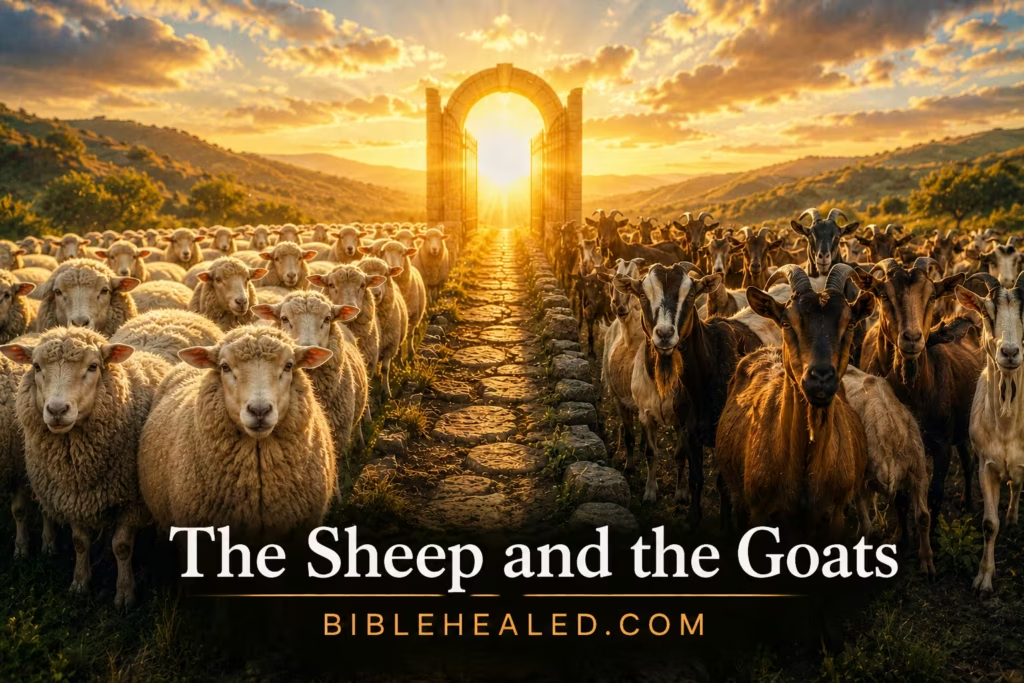
The Parable of the Sheep and the Goats: Verse, Meaning & Lesson
The Parable of the Sheep and the Goats is one of Jesus’ most serious and powerful teachings about judgment, compassion, righteousness, and eternal accountability. This parable appears in Matthew 25:31-46 and describes the final judgment when the Son of Man separates people as a shepherd separates sheep from goats. The sheep are welcomed into eternal life because they demonstrated compassion, mercy, and genuine obedience to God through their treatment of others. The goats are separated for judgment because they failed to show love, mercy, and care toward those in need.
Jesus teaches this parable near the end of His earthly ministry while speaking about His return, the coming Kingdom, and final judgment. The Son of Man represents Christ Himself, the sheep represent the righteous, and the goats represent those who rejected genuine obedience and compassion. The central message is that true faith produces visible fruit through love, mercy, kindness, and service toward others.
This parable does not teach salvation by human works alone, but rather shows that genuine faith naturally reveals itself through righteous actions. The actions of both groups expose the true condition of their hearts. The Parable of the Sheep and the Goats emphasizes accountability, compassion, service, eternal consequences, and the reality that how people treat others reflects their relationship with God.
The Parable of the Sheep and the Goats in Matthew 25:31-46
Matthew 25:31-46 WEB
“But when the Son of Man comes in his glory, and all the holy angels with him, then he will sit on the throne of his glory. Before him all the nations will be gathered, and he will separate them one from another, as the shepherd separates the sheep from the goats. He will set the sheep on his right hand, but the goats on the left.
Then the King will tell those on his right hand, ‘Come, blessed of my Father, inherit the Kingdom prepared for you from the foundation of the world; for I was hungry, and you gave me food to eat. I was thirsty, and you gave me drink. I was a stranger, and you took me in. Naked, and you clothed me. I was sick, and you visited me. I was in prison, and you came to me.’
Then the righteous will answer him, saying, ‘Lord, when did we see you hungry, and feed you; or thirsty, and give you a drink? When did we see you as a stranger, and take you in; or naked, and clothe you? When did we see you sick, or in prison, and come to you?’
The King will answer them, ‘Most certainly I tell you, because you did it to one of the least of these my brothers, you did it to me.’
Then he will say also to those on the left hand, ‘Depart from me, you cursed, into the eternal fire which is prepared for the devil and his angels; for I was hungry, and you didn’t give me food to eat; I was thirsty, and you gave me no drink; I was a stranger, and you didn’t take me in; naked, and you didn’t clothe me; sick, and in prison, and you didn’t visit me.’
Then they will also answer, saying, ‘Lord, when did we see you hungry, or thirsty, or a stranger, or naked, or sick, or in prison, and didn’t help you?’
Then he will answer them, saying, ‘Most certainly I tell you, because you didn’t do it to one of the least of these, you didn’t do it to me.’ These will go away into eternal punishment, but the righteous into eternal life.”
How Matthew 25:31-46 Relates to the Parable of the Sheep and the Goats
In Matthew’s Gospel, Jesus emphasizes final judgment and the visible evidence of genuine righteousness. The separation of sheep and goats represents the ultimate division between those who truly belong to God and those who do not. Sheep and goats often grazed together during the day but were separated later by the shepherd, symbolizing how outward appearances may seem similar until true character is revealed.
Matthew highlights compassion and mercy as evidence of genuine faith. The righteous demonstrate love by feeding the hungry, welcoming strangers, clothing the needy, caring for the sick, and visiting prisoners. Their actions are not performed for recognition or reward because they are surprised when Jesus identifies Himself with those they helped. This reveals that their compassion flowed naturally from transformed hearts.
The passage also emphasizes accountability and eternal consequences. The goats are condemned not necessarily for acts of open cruelty, but for failing to act compassionately when opportunities were before them. Jesus teaches that neglecting mercy and compassion reflects a deeper spiritual failure. Matthew’s account reveals that genuine faith produces visible fruit through love and service toward others.
What Is the Meaning of the Parable of the Sheep and the Goats
The Parable of the Sheep and the Goats teaches that genuine faith reveals itself through compassion, mercy, and righteous living. Jesus uses the imagery of a shepherd separating sheep from goats to illustrate the final judgment when all people will stand before Him. The righteous are identified not merely by outward religion or words, but by lives that reflected God’s love through practical care for others.
This parable also teaches that how people treat others matters deeply to God. Jesus identifies personally with the hungry, thirsty, sick, imprisoned, and vulnerable. Acts of kindness and mercy toward others are treated as acts done toward Christ Himself. The parable emphasizes that faith is not merely intellectual belief but a transformed life that produces compassion and obedience.
The Parable of the Sheep and the Goats further teaches the certainty of judgment and eternal accountability. Every person will ultimately answer before God, and genuine righteousness will be revealed. Jesus teaches that compassion, mercy, and faithful obedience are evidence of a heart transformed by God. The parable ultimately emphasizes eternal consequences, love in action, and the reality of God’s coming judgment.
Lessons from the Parable of the Sheep and the Goats
1. Genuine Faith Produces Compassion
The sheep demonstrate mercy and kindness toward people in need. Jesus teaches that genuine faith naturally produces compassion and care for others. A transformed heart reflects God’s love through actions as well as words. Faith should influence how believers treat vulnerable and suffering people. Compassion becomes evidence of spiritual transformation.
2. Every Person Matters to God
Jesus identifies Himself with “the least of these,” showing God’s deep concern for the needy, suffering, and overlooked. The hungry, sick, lonely, and imprisoned are not invisible to God. Believers are called to value and care for people the world may ignore. Every act of kindness carries spiritual significance. God notices how people treat others.
3. Neglect Can Reveal Spiritual Failure
The goats are condemned largely for what they failed to do rather than only for harmful actions they committed. Jesus teaches that ignoring opportunities to show mercy reflects spiritual emptiness and indifference. Faith cannot remain passive when confronted with human need. Believers are responsible for responding compassionately when able. Neglect carries consequences.
4. Final Judgment Is Certain
The parable strongly emphasizes that all people will ultimately stand before Christ in judgment. Jesus separates the sheep from the goats with complete justice and authority. Human status, appearance, and outward religion will not hide the true condition of the heart. Eternal consequences are real and unavoidable. Believers are called to live with accountability before God.
5. Serving Others Reflects Service to Christ
Jesus teaches that caring for others is treated as caring for Him personally. Acts of mercy, generosity, and compassion carry eternal value because they reflect God’s character. Everyday opportunities to serve others become opportunities to honor Christ. Believers are called to love people sincerely and sacrificially. Serving others becomes an expression of worship and obedience to God.
The Sheep and the Goats Parable Summary
The Parable of the Sheep and the Goats teaches that genuine faith is revealed through compassion, mercy, and righteous living. In Matthew 25:31-46, Jesus describes the final judgment where the Son of Man separates people like a shepherd separates sheep from goats. The righteous inherit eternal life because their lives reflected God’s love through practical acts of compassion, while the unrighteous face judgment because they failed to care for others in need.
Matthew emphasizes accountability, compassion, and the eternal consequences of how people live and treat others. Jesus identifies personally with the vulnerable and teaches that acts of mercy done toward others are considered acts done toward Him. The parable reveals that genuine faith produces visible fruit through kindness, service, and love.
This parable ultimately reminds believers that faith must move beyond words into action. The Parable of the Sheep and the Goats teaches that believers are called to reflect God’s compassion through everyday life and relationships. Jesus warns that final judgment is certain and that genuine righteousness will be revealed through lives marked by mercy, obedience, and love for others.
Read More Parables In the Bible
The Parable of the Lamp on a Stand is just one of many parables in the Bible. Use the links below to explore more of Jesus’ parables, their meanings, and life lessons.
- All Jesus Parables
- 38 Parables of Jesus (Summarized List)
- Jesus Parables In the Book of Matthew
- Jesus Parables In the Book of Mark
- Jesus Parables In the Book of Luke
- Parables About the Kingdom of God & Heaven
- Parable of the Barren Fig Tree
- Parable of the Divided Kingdom
- Parable of the Faithful Servant
- Parable of the Fig Tree
- Parable of the Friend at Night
- Parable of the Good Samaritan
- Parable of the Great Banquet
- Parable of the Growing Seed
- Parable of the Hidden Treasure
- Parable of the Householder
- Parable of the Lamp on a Lamp Stand
- Parable of the Lost Coin
- Parable of the Lost Sheep
- Parable of the Master and Servant
- Parable of the Mustard Seed
- Parable of the Net
- Parable of the New Cloth and New Wineskins
- Parable of the Pearl
- Parable of the Persistent Widow
- Parable of the Pharisee and the Tax Collector
- Parable of the Prodigal Son
- Parable of the Rich Fool
- Parable of the Rich Man and Lazarus
- Parable of the Sheep and the Goats
- Parable of the Sower
- Parable of the Speck and the Log
- Parable of the Talents
- Parable of the Ten Virgins
- Parable of the Tenants
- Parable of the Tower
- Parable of the Two Debtors
- Parable of the Two Sons
- Parable of the Unforgiving Servant
- Parable of the Unjust Steward
- Parable of the Watchful Servants
- Parable of the Wedding Banquet
- Parable of the Wedding Feast
- Parable of the Weeds
- Parable of the Wise and the Foolish Builders
- Parable of the Workers In the Vineyard
- Parable of the Yeast